
A Hidden Giant Beneath Antarctica’s Ice Reveals Climate Secrets
In the vast, windswept expanse of West Antarctica, where temperatures plummet to unimaginable depths and storms rage with primordial fury, scientists have uncovered something extraordinary that could revolutionize our understanding of climate change. Far beneath the frozen surface of the Pine Island Glacier, a colossal mountain range lies hidden, waiting to tell its ancient story to a world desperately seeking answers about our planet’s future.
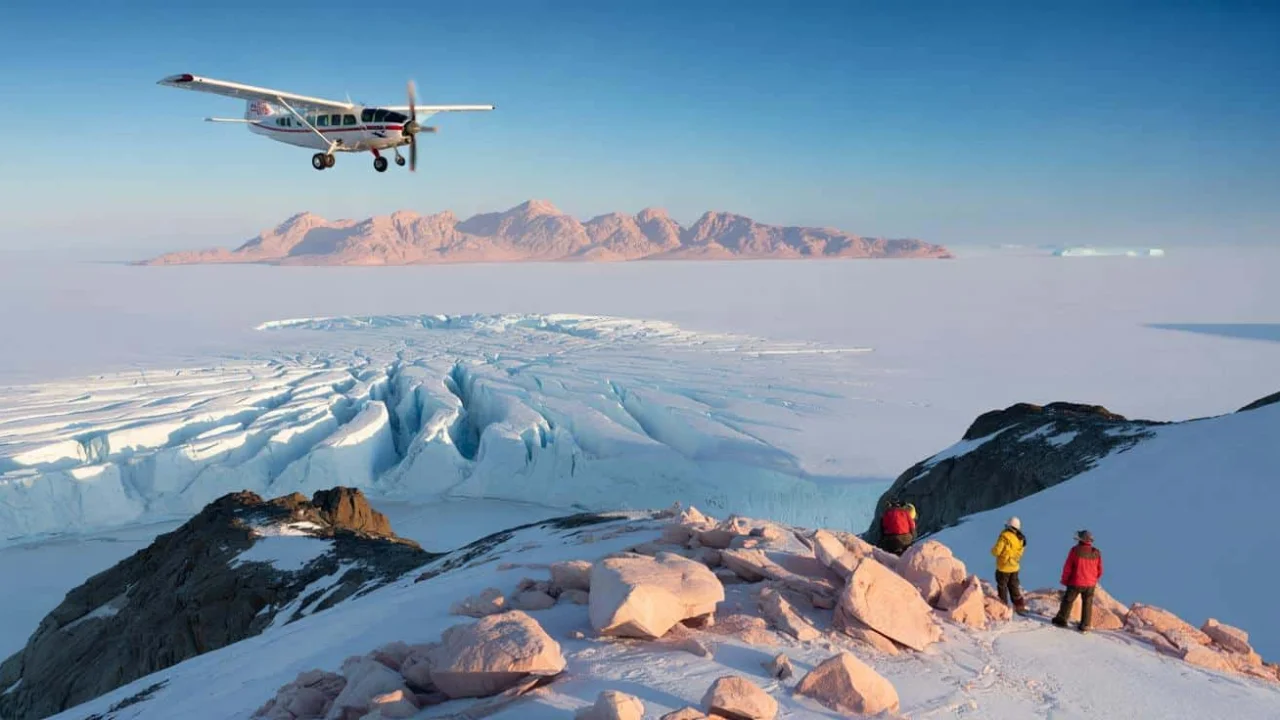
The discovery began with a mystery that would make any detective novel pale in comparison. For years, researchers trudging through the remote Hudson Mountains found themselves face-to-face with an impossible puzzle: pale pink granite boulders, gleaming like jewels against the stark Antarctic landscape, scattered across ridges where they simply shouldn’t exist. These weren’t ordinary rocks – they were geological time capsules, holding secrets from an era when dinosaurs ruled the Earth and Antarctica was a very different place.
What makes this discovery so emotionally compelling is the realization that beneath our feet – or in this case, beneath millions of tons of ice – lies a 100-kilometer-long granite massif that has been silently shaping the behavior of one of the world’s most critical glaciers. This isn’t just a scientific curiosity; it’s a key piece of the puzzle that could help us understand how quickly our seas might rise and how dramatically our coastlines might change.
The implications are staggering. The Pine Island Glacier is already one of the fastest-thinning glaciers on our planet, and understanding what lies beneath it could provide crucial insights into how glaciers respond to changing climate conditions. This hidden mountain range represents hope – hope that we can better predict, prepare for, and perhaps even mitigate the most catastrophic effects of climate change.
The Mystery of the Pink Boulders
The story begins with geological detective work that spans continents and millions of years. Scientists working in the Hudson Mountains of West Antarctica kept encountering something that defied explanation: massive pink granite blocks perched high on volcanic ridges, looking as out of place as tropical flowers in a snowstorm.
- Ancient Origins: Laboratory analysis revealed these granite samples to be approximately 175 million years old, dating back to the Jurassic period when Antarctica was part of the supercontinent Gondwana
- Impossible Locations: The boulders were found far from any visible granite source, scattered across ridges in a pattern that suggested they had traveled great distances
- Unique Composition: The pale pink coloration and mineral composition were unlike the local volcanic rocks, indicating they originated from a completely different geological formation
- Erosional Evidence: The rounded edges and weathered surfaces suggested these rocks had been transported by glacial action over long periods
Aerial Detective Work: How Aircraft Revealed the Hidden Mountain
While geologists puzzled over surface clues, the British Antarctic Survey was conducting sophisticated aerial surveys over the Pine Island Glacier using gravimetric technology. These flights weren’t just routine mapping exercises – they were archaeological expeditions into Earth’s hidden architecture.
“When we first saw the gravity anomaly data, we knew we were looking at something significant,” explains Dr. Sarah Mitchell, lead glaciologist on the survey team. “The signal was so strong and consistent that it could only indicate a massive, dense body of rock beneath the ice. But it wasn’t until we connected it with the surface granite samples that the full picture emerged.”
The aircraft-mounted gravimeters detected minute variations in Earth’s gravitational field as they flew over different materials. Dense granite pulls more strongly than ice or sediment, creating a distinctive signature that trained scientists can read like a geological map.
The Buried Giant: Understanding the Discovery
| Characteristic | Measurement | Comparison |
|---|---|---|
| Length | 100 kilometers | Roughly the distance from New York to Philadelphia |
| Thickness | 7 kilometers | Comparable to an “upside-down Mont Blanc” |
| Age | 175 million years | Jurassic period, when dinosaurs roamed Earth |
| Composition | Pink granite | Similar to granite found in Brittany or Yosemite |
| Ice Cover | Variable depth | Completely buried beneath Pine Island Glacier |
Climate Implications and Research Potential
The discovery of this buried mountain range has profound implications for climate research and our understanding of glacial behavior. The Pine Island Glacier sits atop this ancient granite foundation, and the interaction between ice and rock could help explain why this glacier behaves differently from others in the region.
- Heat Flow Patterns: Granite conducts heat differently than other rock types, potentially affecting ice melting rates from below
- Water Drainage Systems: The mountain’s shape and composition could influence how meltwater flows beneath the glacier
- Glacial Stability: Understanding the bedrock topography helps scientists model how the glacier might respond to warming temperatures
- Sea Level Predictions: Better knowledge of what lies beneath major glaciers improves accuracy of sea level rise projections
- Historical Climate Data: The granite samples may contain mineral records of past climate conditions
“This discovery changes everything we thought we knew about the Pine Island region,” states Dr. James Richardson, a paleoclimatologist at the International Antarctic Research Center. “We’re not just looking at ice moving over a flat surface – we’re seeing how a massive geological structure influences one of the most important glaciers for global sea level rise.”
The Glacier as a Geological Time Machine
Perhaps the most fascinating aspect of this discovery is how it reveals glaciers as incredibly powerful geological agents. The Pine Island Glacier has been slowly grinding away at this buried mountain for millions of years, carrying pieces of it across vast distances like a frozen conveyor belt.
This process of glacial erosion and transport tells a story that spans geological epochs. When these pink granite blocks were first formed 175 million years ago, they were part of a very different world. Antarctica was warmer, connected to other continents, and home to forests and dinosaurs. The granite that now lies buried was once part of mountain ranges that rose above ancient landscapes.
As ice ages came and went, glaciers carved into these mountains, breaking off chunks and carrying them along their frozen journey. Some pieces were dropped along the way, creating the scattered boulder fields that first caught scientists’ attention. Others remain embedded in the glacier itself, still traveling toward the sea after millions of years.
Advanced Technology Reveals Ancient Secrets
The technology used to make this discovery represents a remarkable fusion of cutting-edge science and old-fashioned geological detective work. Gravimetric surveys from aircraft can detect density variations in the Earth’s crust with incredible precision, essentially allowing scientists to “see” through miles of ice to the bedrock below.
These surveys work by measuring minute changes in gravitational acceleration as the aircraft moves over different materials. Dense rocks like granite create stronger gravitational pulls than ice or sediment, creating distinctive patterns that trained researchers can interpret. When combined with surface geological evidence and ice-penetrating radar, these techniques can reveal subsurface structures in extraordinary detail.
“We’re essentially doing archaeology on a continental scale,” explains Dr. Maria Gonzalez, a geophysicist involved in the aerial surveys. “Every flight reveals more about the hidden world beneath Antarctica’s ice, and each discovery helps us understand how this continent has evolved over millions of years.”
Implications for Global Climate Science
The discovery of this buried mountain range beneath the Pine Island Glacier has significant implications that extend far beyond Antarctica. Understanding the geological foundations of major ice sheets is crucial for predicting how they will respond to changing climate conditions and how quickly they might contribute to sea level rise.
The Pine Island region is already one of the most closely watched areas in Antarctica because of its rapid ice loss. The glacier has been thinning at an accelerating rate, and scientists have been working to understand why. The discovery of this massive granite body provides new insights into the complex interactions between ice, rock, and climate that drive glacial behavior.
This research also highlights the importance of geological factors in climate science. While much attention focuses on atmospheric and oceanic changes, the solid Earth beneath ice sheets plays a crucial role in determining how glaciers respond to warming. Heat flow from the Earth’s interior, the shape of the bedrock, and the composition of underlying rocks all influence ice dynamics.
Frequently Asked Questions
How did scientists discover a mountain range buried under ice?
Aircraft equipped with gravimeters detected density variations indicating dense granite beneath the Pine Island Glacier.
Why are the pink granite boulders significant to this discovery?
The scattered boulders provided surface evidence of the buried granite, helping confirm the aerial survey data.
How old is the buried granite mountain range?
Laboratory analysis shows the granite is approximately 175 million years old, dating to the Jurassic period.
What does this discovery mean for climate change research?
It helps scientists better understand glacial behavior and improve predictions of sea level rise from Antarctic ice loss.
How large is the buried granite formation?
The structure extends about 100 kilometers in length and reaches approximately 7 kilometers in thickness.
Could similar buried features exist under other Antarctic glaciers?
Scientists believe many more geological structures remain hidden beneath Antarctica’s ice, awaiting discovery through advanced surveying techniques.
Future Research and Exploration
This groundbreaking discovery opens new avenues for Antarctic research and climate science. Scientists are now planning more detailed surveys of the region to map the full extent of the buried granite formation and understand its influence on glacial dynamics. Advanced drilling techniques may eventually allow researchers to extract samples directly from the buried mountain, providing even more detailed information about Antarctica’s geological history.
The success of this research also demonstrates the power of interdisciplinary collaboration in modern science. By combining traditional field geology with cutting-edge aerial surveys and sophisticated data analysis, researchers have revealed secrets hidden for millions of years beneath one of Earth’s most remote and challenging environments.
As climate change continues to reshape our planet, discoveries like this remind us how much we still have to learn about the complex systems that govern Earth’s climate. The buried mountain beneath the Pine Island Glacier is more than just a geological curiosity – it’s a key piece of the puzzle that could help us better understand and prepare for our planet’s changing future.