
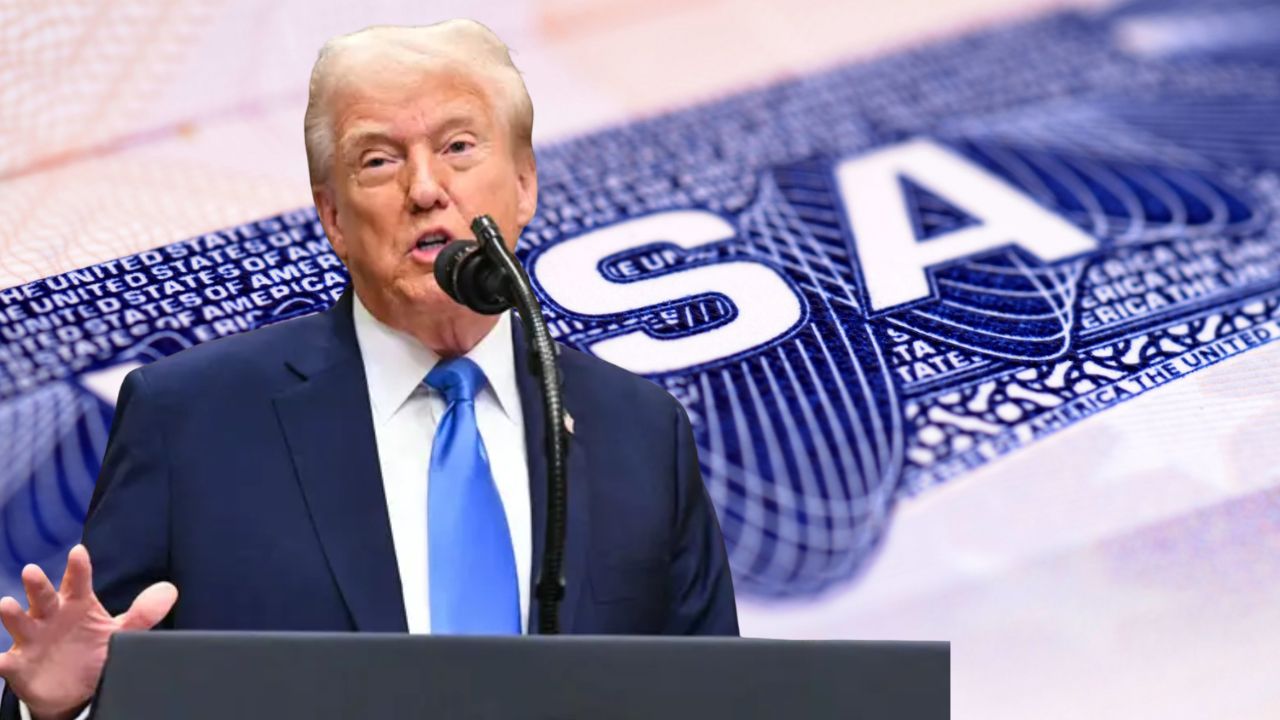
The immigration topic is once again permeating American university corridors. A new set of 2026 student visa rules has been proposed, which could change how foreign students obtain education and training in the US as Donald Trump signals a return to stricter monitoring. The proposed framework touches on the three primary non-immigrant study categories, F-1, J-1, and M-1, and suggests a more regulated, compliance-driven approach, although formal regulatory publication is still pending. This is not just a Washington issue.
Every year, the US welcomes more than a million foreign students who support entire academic ecosystems and contribute billions of dollars to the country’s economy. The 2026 student visa regulations reveal a well-known philosophy: study in America is acceptable, but only under tougher terms, clearer intent, and greater surveillance.
New Rule for US Student Visa
Trump has not yet brought a final legally binding new rule into force for F‑1, J‑1, and M‑1 students, but his administration has put forward a set of proposed changes that would significantly tighten student visa rules and are moving through the U.S. rule‑making process. At this stage most changes are proposals or draft rules, so they signal the likely direction of policy from 2026 onward but do not immediately alter your current status unless and until a final rule is published with an effective date.
What Trump’s team is proposing
The main idea is to replace the traditional “duration of status” system with fixed‑term admissions and stricter control over how long students can stay and how they use work options such as OPT.
- End of open‑ended “duration of status” and move to a fixed stay of up to four years for F‑1, J‑1, and M‑1, usually tied to the program end date on the I‑20/DS‑2019 but capped at four years.
- After the initial period, students would need to apply to USCIS for extensions with detailed evidence of academic progress and funding instead of simply continuing in status through SEVIS updates.
- DHS and the State Department also propose stricter oversight: more frequent reporting by schools and J‑1 sponsors, possible biometrics in more cases, limits on program changes and transfers for F‑1 graduate students, and shorter post‑completion grace periods.
Major Changes
The major changes to US student visa policies for F-1, J-1, and M-1 visas under President Trump’s administration focus on stricter limits and vetting to enhance compliance and security.
| Policy Change | Old Rule | New Proposed Rule |
|---|---|---|
| Duration of Status | Unlimited as long as enrolled | Max 4 years or program length |
| Grace Period after Completion | 60 days | 30 days |
| Undergraduate School Transfers | Immediate possible | Requires 1 academic year |
| Graduate Program Changes | Allowed mid-course | Prohibited |
| Second Degree (Same/Lower Level) | Permitted | Banned |
| English Language Study | No time cap | Max 24 months |
| Social Media Vetting | Basic screening | Expanded for all applicants |
“Individuals applying for admission in either F or J status would be admitted only until the program end date noted in their I-20 or DS-2019, not to exceed 4 years, plus a period of 30 days following their program end date.”: DHS
Impacts on Students
Proposed changes to F-1, J-1, and M-1 visas under the Trump administration replace flexible “duration of status” with fixed 4-year limits, forcing extensions via Form I-539 for longer programs like PhDs and creating risks of unlawful presence accrual if deadlines lapse. Grace periods shrink from 60 to 30 days post-completion, limiting time for OPT/STEM OPT transitions, departures, or status changes.
Academic Disruptions
- PhD and multi-year graduate students face mandatory extension filings, biometrics, and fees, potentially delaying research or forcing program switches.
- Bans on undergrad major changes in the first year and graduate-level program shifts increase rigidity, hindering career pivots.
- Heightened USCIS scrutiny on conduct, social media, and ties raises denial/revocation risks for activism or minor infractions.
Career and Financial Strain
Proposed Trump-era policies impose heavy financial burdens on F-1, J-1, and M-1 students through a $100,000 H-1B petition fee for new filings from abroad, effective September 2025, deterring employer sponsorships and pushing Indian IT firms to halt H-1B usage entirely. Fixed 4-year visa caps necessitate repeated Form I-539 extensions with biometrics and fees for PhD or long programs, while grace periods drop to 30 days, squeezing OPT/STEM OPT transitions and risking unlawful presence.
OPT and Work Barriers
- STEM OPT eligibility persists for current students, but fixed admission dates demand concurrent USCIS extensions, complicating 24-month work authorizations tied to STEM degrees.
- Employers face Requests for Evidence (RFEs) and “Buy American” proof, reviving 2017 denial spikes and favoring O-1 or offshoring over student hires.
H-1B Transition Crunch
Indian students, holding 71% of H-1Bs, see dreams shattered as families cancel US plans amid 100x fee hikes from $2,000–$5,000, prompting shifts to Canada or Europe. Lawsuits challenge the fee’s legality, but ongoing uncertainty slashes enrollment and innovation in tech/STEM fields.
Advise for Students Preparing to Apply
Students preparing F-1, J-1, or M-1 visa applications face heightened scrutiny under Trump policies, including mandatory in-person interviews since September 2025, social media reviews, and potential biometrics like fingerprints or facial scans. Apply up to 365 days early via SEVIS-approved schools, prioritizing programs under 4 years to avoid extension filings, and verify I-20/DS-2019 end dates align precisely with your plans.
“We want to have great students here. We just don’t want students that are causing trouble… I want to make sure that the foreign students are people that can love our country.”: President Donald J. Trump
FAQ’s
What are the main causes of the recent changes involving student visas?
The administration aims to safeguard US jobs, increase compliance, strengthen national security, and maintain program integrity.
How will F-1 visa students’ job possibilities change?
Curricular Practical Training (CPT) and Optional Practical Training (OPT) have stricter time and eligibility restrictions.
Will holders of current student visas be affected right away?
Until their status is changed or they are renewed, current students are usually subject to their previous rules; however, some enforcement applies earlier for noncompliance.
How should students get ready to fulfill the new standards for applications?
In addition to preparing thorough personal, financial, and academic paperwork, students should think about getting expert immigration counsel.