
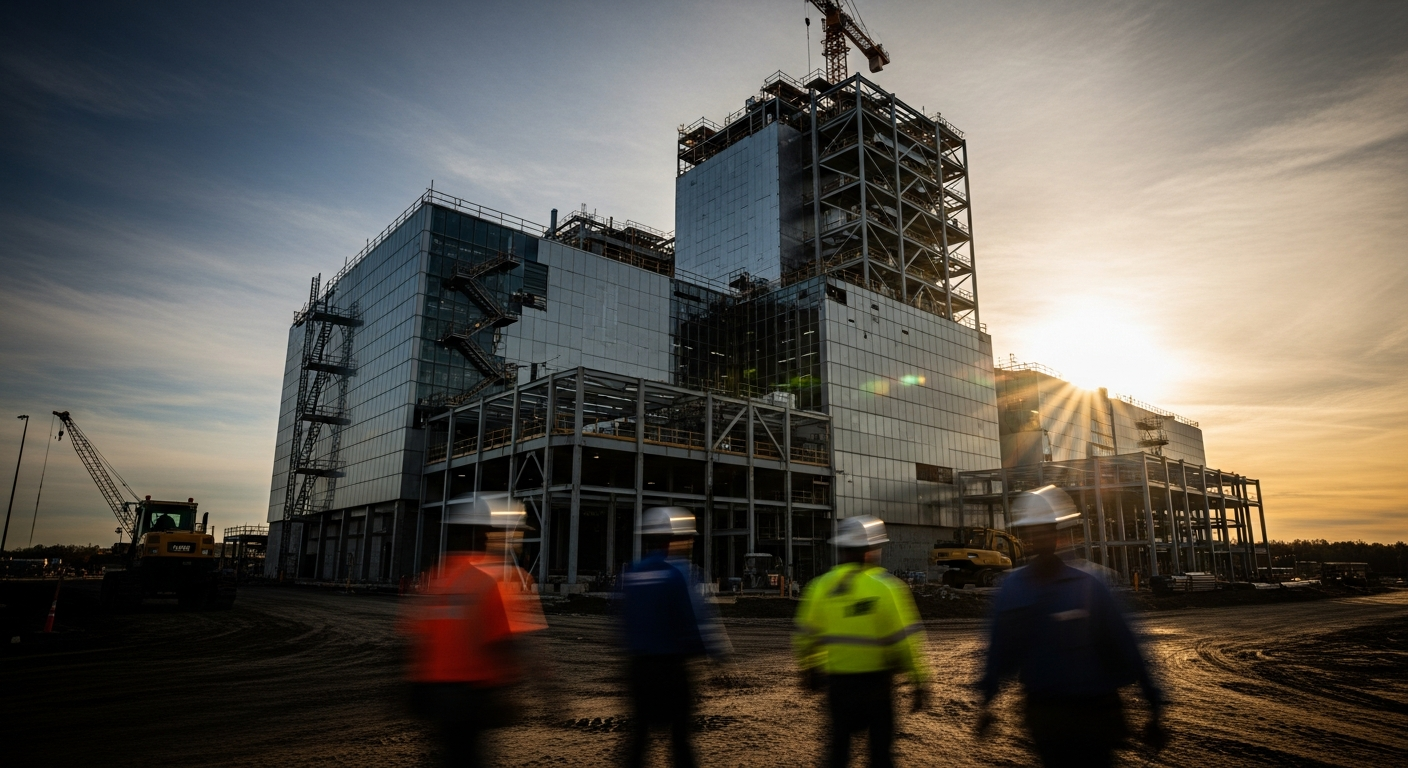
The tech industry is making waves in upstate New York. Micron Technology, one of the world’s leading semiconductor manufacturers, has officially broken ground on what’s set to be the **largest memory chip fabrication plant** in U.S. history. Located in Clay, just outside of Syracuse, this monumental project marks a transformational opportunity not just for the central New York region but also for the broader American economy. The plant underscores a renewed push for domestic chip production and signals a long-term commitment to supply chain stability and technological independence in the face of growing global competition.
With a planned investment of up to $100 billion over the next two decades, Micron’s megafab represents a cornerstone of American innovation and manufacturing resurgence. The move aligns tightly with federal incentives under the CHIPS and Science Act, passed in 2022, which aims to bolster U.S. semiconductor production to reduce dependency on foreign suppliers. This initiative doesn’t just symbolize economic revival — it packs the potential to create tens of thousands of high-paying direct and indirect jobs while reshaping the economic landscape of central New York for generations to come.
Key details at a glance
| Project Name | Micron Megafab Plant in Clay, New York |
|---|---|
| Total Investment | Up to $100 billion over 20 years |
| Location | Clay, Onondaga County, Central New York |
| Estimated Jobs Created | Over 50,000 (9,000 Micron jobs + 40,000 indirect jobs) |
| Timeframe | First phase construction begins 2024; ramp-up through the 2040s |
Who wins and who could lose in this development
| Winners | Losers |
|---|---|
| – Central New York economy – Blue-collar workforce – STEM graduates and educators – National tech supply chain |
– Competing chip importers – Real estate buyers (due to rising prices) – Smaller tech hubs facing talent drain |
What Micron’s investment means for the U.S. chip supply
The plant is part of a broader national strategy to repatriate semiconductor manufacturing. With **global chip shortages** highlighting the risks of over-reliance on Asian suppliers, particularly Taiwan and South Korea, Micron’s expansion into New York is deeply strategic. It fits into a federal narrative that emphasizes industrial resilience, national security, and high-tech competitiveness.
According to Micron, once fully operational, the new facility could meet a significant portion of U.S. demand for memory chips used in smartphones, systems, vehicles, and defense applications. This is especially crucial as the demand for memory is expected to surge with the rise of AI, 5G, and edge computing.
How the project could transform Central New York
Historically a region beset by industrial decline and job losses, Central New York now finds itself at the cusp of a dramatic reinvention. Micron’s megaproject has been termed the most consequential private investment in New York State history, with 1,400 acres of land allocated to host what could eventually comprise four massive fabrication facilities.
Micron is projecting the creation of about **9,000 company jobs** and another **40,000 construction, transportation, and indirect jobs** across the region. Salaries at Micron are expected to average around $100,000 annually, a substantial injection into an area where previous economic revival efforts have largely fallen short.
“This is not just a factory, it’s a catalyst for a new era in Central New York. We’re building more than chips — we’re building opportunity.”
— Sanjay Mehrotra, CEO of Micron Technology
Public and private sector partnerships fueling the project
The project is not happening in a vacuum. It is supported by a robust coalition of local, state, and federal stakeholders. New York State pledged **$5.5 billion in incentives**, including tax credits, workforce development programs, and infrastructure enhancements. The federal CHIPS Act also provides Micron access to competitive grants and tax incentives designed to catalyze domestic semiconductor production.
Partnerships with local colleges, especially Syracuse University and SUNY institutions, are also paving the way for workforce development programs tailored to semiconductor engineering and maintenance. These educational pipelines are expected to become essential recruiting grounds as the plant scales up operations.
Environmental considerations and commitments
Given the large environmental footprint of chip production, Micron has vowed to integrate **sustainable practices** into every phase of development. The company announced that the facility will be 100% powered by renewable energy by 2040 and aims for LEED Gold certification—a benchmark for sustainability in building design.
Water usage, a critical aspect of semiconductor manufacturing, will be managed through advanced recycling systems in partnership with local utilities and government bodies. The company plans to spend substantially on infrastructure improvements, including clean energy transitions, water line upgrades, and air filtration systems.
How local communities are preparing
Once news of Micron’s investment broke, local governments began accelerating zoning plans, housing developments, and transit infrastructure enhancements. Schools in Onondaga County are adding new STEM programs, and community colleges are expanding their tech training credentials to anticipate the engineering demand of the workforce of tomorrow.
Housing prices are already experiencing an uptick, raising concerns about affordability and gentrification. County leaders are working to get ahead of this curve with housing assistance programs and zoning revisions to allow for more affordable units near the plant site.
“Micron’s investment offers a second chance for a region that hasn’t seen this scale of industrial growth in generations.”
— Kathy Hochul, Governor of New York
National impact and geopolitical implications
The U.S. is now firmly on a path to transform from a net chip importer to a global hub for semiconductor innovation and production. Micron’s move complements similar investments by other manufacturers, signaling a turning tide in the country’s industrial strategy. With rising tensions around Taiwan and increased dependence on foreign chipmakers, securing domestic manufacturing capacity stands as a key **national security imperative**.
Industry analysts argue that the centralization of high-tech facilities within U.S. borders could also inspire youth to pursue careers in engineering and applied sciences, reversing long-standing skills gaps across the nation.
“This is an inflection point. We are turning risk into resilience and vulnerability into strength.”
— Gina Raimondo, U.S. Secretary of Commerce
What comes next in the timeline
Construction has officially kicked off with site prep, road realignments, and utility hookups underway. The first set of buildings is slated to be operational by the end of this decade, with further expansions planned out through the 2040s. Hiring timelines will ramp up with each phase, with early focus on engineers, skilled tradespeople, and infrastructure experts.
Micron is actively coordinating with local workforce development boards, union groups, and educators to create scalable training programs for every specialization—from robotics to wafer clean rooms. The long game? To make Central New York a name synonymous with next-gen industrial manufacturing — on par with Silicon Valley and Austin’s tech corridor.
Short FAQs
What is Micron building in New York?
Micron is constructing a mega memory chip fabrication facility near Syracuse, which will become the largest in U.S. history once completed.
How many jobs will be created?
The project is expected to create around 9,000 Micron jobs and more than 40,000 indirect jobs.
When will the plant be operational?
The site is currently in early construction phases, with the first phase expected to be operational before the end of the decade.
Why was New York chosen for the plant?
Factors included workforce availability, proximity to infrastructure, state-level incentives, and support from local educational institutions.
Will there be environmental concerns?
Micron has pledged to meet stringent environmental standards and aims for 100% renewable energy usage by 2040.
How does this tie into national policy?
The project aligns with the CHIPS and Science Act, which provides subsidies and tax incentives for domestic chip production.
What skills are in demand for these jobs?
Engineering, manufacturing, system installation, clean room operations, and semiconductor maintenance will be key skill areas.
Can local workers apply for immediate jobs?
Most initial jobs will be in construction and prep, with large-scale hiring in tech and manufacturing roles expected in coming years.