
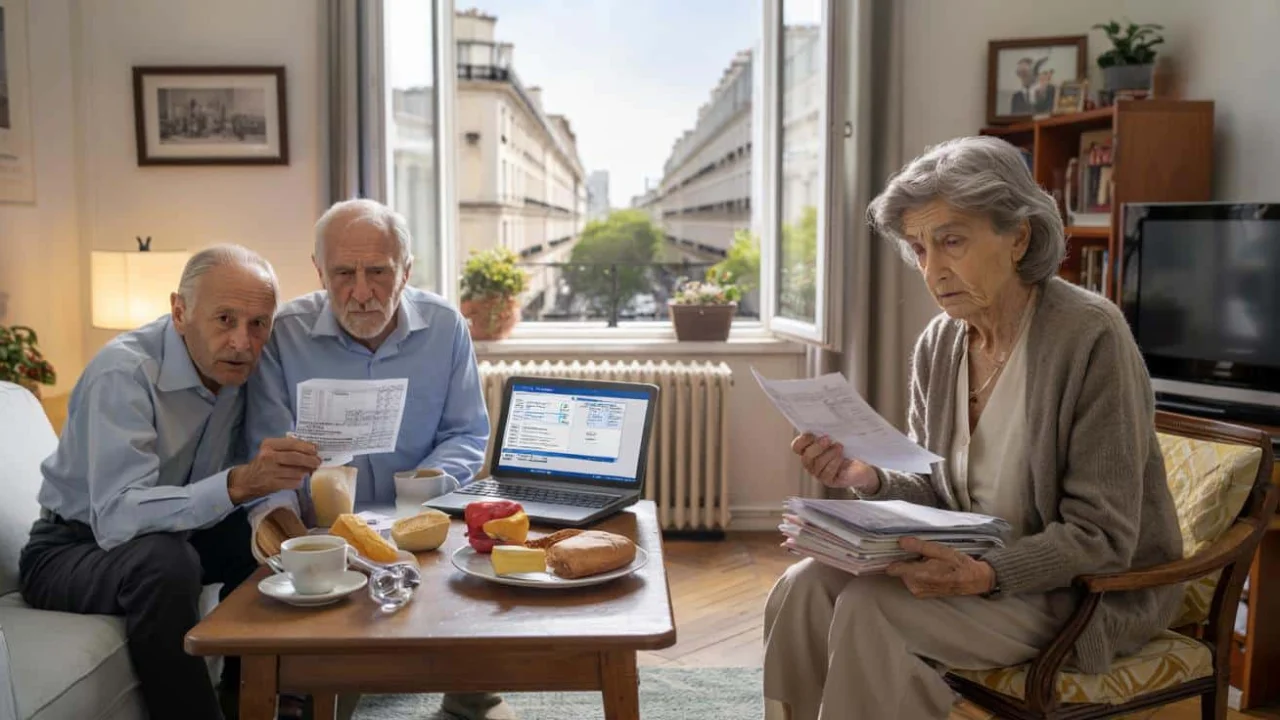
The Harsh Reality of French Pension Income
As prices climb and bills stack up, French retirees are quietly asking a blunt question: how much money stops retirement feeling like survival? The conversation goes far beyond a few euros more on a pension slip. It touches on dignity, independence, and how a wealthy country chooses to treat those who no longer work.
For millions of French seniors, the golden years have lost their shine. What was once promised as a time of rest and reward has become a monthly struggle to balance basic needs against dwindling resources. The stark reality is that french pension income often falls short of what experts consider necessary for a decent standard of living.
This isn’t about extravagance or luxury purchases. It’s about the fundamental question of whether retirement should mean accepting a significant reduction in quality of life, or whether society owes its elders something more dignified. The numbers tell a story that many French families know all too well: retirement poverty is not just possible, it’s increasingly common.
In France, close to a third of retirees say they struggle to cover day-to-day expenses. Rent or service charges, food, health costs and transport keep rising, while pensions move far more slowly. Against this backdrop, researchers and senior organisations have tried to put a figure on a minimum monthly budget to live decently in retirement.
Living Decently Is Not Just Paying the Bills
The idea is simple: not a budget for luxury, but for a life that remains normal, social and autonomous. That means more than survival economics. A “decent” retirement budget is one that lets a person eat well, heat their home, get treatment when needed and maintain a modest social life.
For specialists, living decently includes being able to:
- Buy varied and sufficient food, not just the cheapest products
- See a doctor or specialist without putting it off for months
- Heat and maintain one’s home to a healthy standard
- Visit family or friends, even if it means paying for a train ticket
- Go out occasionally, have small leisure activities and hobbies
- Set aside a little money for unexpected costs
Inflation on food and energy, rising service charges in apartment buildings and increasing health copayments are squeezing this budget from every side. On top of that, situations vary widely: a retired homeowner in a small town, a widowed tenant in central Paris and a couple in rural France do not face the same housing costs or needs.
The Benchmark Figures Researchers Are Using
One of the most cited studies in France comes from the Institute of Economic and Social Research (IRES). Its experts calculated a threshold of €1,634 per month for a single retired person who owns their home outright and does not pay rent. This amount is described as a minimum income to “live decently” and still take part in social life.
This benchmark hits a nerve when compared with official data. The French statistics body for social ministries, the DREES, reports that the average gross pension in France is about €1,626 per month, which translates to roughly €1,500 net. In other words, the “average” pension sits just under or barely at the estimated dignity threshold for a homeowner.
“We’re not talking about living in luxury here. We’re talking about basic human dignity in retirement. The gap between what people receive and what they need to maintain social connections and health is deeply concerning,” explains Marie Dubois, a researcher at the Institute of Economic and Social Research.
| Category | Monthly Cost (€) | Percentage of Budget |
|---|---|---|
| Food and beverages | 420 | 25.7% |
| Housing costs (maintenance, utilities) | 380 | 23.2% |
| Health and medical expenses | 250 | 15.3% |
| Transport | 180 | 11.0% |
| Clothing and personal care | 120 | 7.3% |
| Social activities and culture | 150 | 9.2% |
| Emergency fund | 134 | 8.2% |
| Total | 1,634 | 100% |
The Regional Disparities in French Pension Income
The situation becomes even more complex when considering geographical differences. A retiree in rural Normandy faces vastly different costs compared to someone living in central Lyon or Marseille. Housing costs alone can vary by several hundred euros monthly, while access to services, healthcare, and social activities differs dramatically.
Key factors affecting regional pension adequacy include:
- Local housing market conditions and property taxes
- Availability and cost of healthcare services
- Public transport accessibility and pricing
- Cost of basic goods and services
- Social infrastructure and community support systems
Urban retirees often face higher living costs but have better access to services, while rural retirees might enjoy lower housing costs but struggle with transportation and healthcare access. This creates a patchwork of retirement experiences across France, where french pension income adequacy depends heavily on location.
What Happens When You Factor in Ageing at Home?
Retirement is not just about paying current bills; ageing at home often adds another layer of costs. A barometer from Retraite.com and Silver Alliance estimates that €1,291 per month is needed for services that allow older people to remain at home in good conditions.
This includes help with cleaning, meals, technical aids, personal assistance, or home adaptations, and comes on top of regular living expenses. The reality is that many French retirees will need these services as they age, effectively requiring a french pension income well above €2,900 per month to maintain independence at home.
“The cost of ageing in place is often overlooked in pension planning. We see families forced to make impossible choices between maintaining independence and financial security,” notes Dr. Pierre Laurent, a gerontologist specializing in retirement economics.
The Gender Gap in French Pension Income
Women face particular challenges in achieving adequate french pension income. Career interruptions for child-rearing, lower average salaries throughout their working lives, and longer life expectancy create a perfect storm of pension inadequacy. French women receive on average 40% less pension income than men, making the €1,634 threshold even more elusive.
The statistics are sobering:
- Women’s average pension: €1,065 per month
- Men’s average pension: €1,780 per month
- Poverty rate among elderly women: 18.2%
- Poverty rate among elderly men: 12.4%
“The pension gender gap reflects decades of workplace inequality. It’s not just about individual choices—it’s about structural barriers that follow women into retirement,” emphasizes Sylvie Martin, director of the French Association for Women’s Rights in Retirement.
Policy Responses and Future Outlook
French policymakers are grappling with these realities through various reforms and support measures. The government has introduced targeted benefits for low-income retirees, including the ASPA (solidarity allowance for the elderly) and housing assistance programs. However, these measures often fall short of bridging the gap between actual pension income and decent living standards.
Recent policy initiatives include:
- Gradual increases in minimum pension guarantees
- Enhanced healthcare coverage for retirees
- Support for home adaptation and care services
- Regional programs addressing rural retirement challenges
Frequently Asked Questions
What is the average pension in France?
The average gross pension in France is approximately €1,626 per month, or about €1,500 net.
How much do you need to live decently in French retirement?
Experts estimate €1,634 monthly for a homeowner, plus additional costs for care services as needed.
Do French women receive less pension than men?
Yes, women receive on average 40% less pension income than men due to career gaps and salary differences.
What support exists for low-income French retirees?
Programs include ASPA solidarity allowance, housing assistance, and healthcare coverage enhancements for qualifying retirees.
How do housing costs affect French pension adequacy?
Homeowners need less pension income than renters; regional variations can change requirements by hundreds of euros monthly.
What are the biggest expenses in French retirement?
Food, housing maintenance, healthcare, and transport typically consume over 75% of a retiree’s monthly budget.
The debate over adequate pension income in France reflects broader questions about social solidarity and intergenerational responsibility. As the population ages and economic pressures mount, finding sustainable solutions becomes increasingly urgent. The €1,634 threshold isn’t just a number—it represents the difference between dignified retirement and daily struggle for millions of French seniors.