
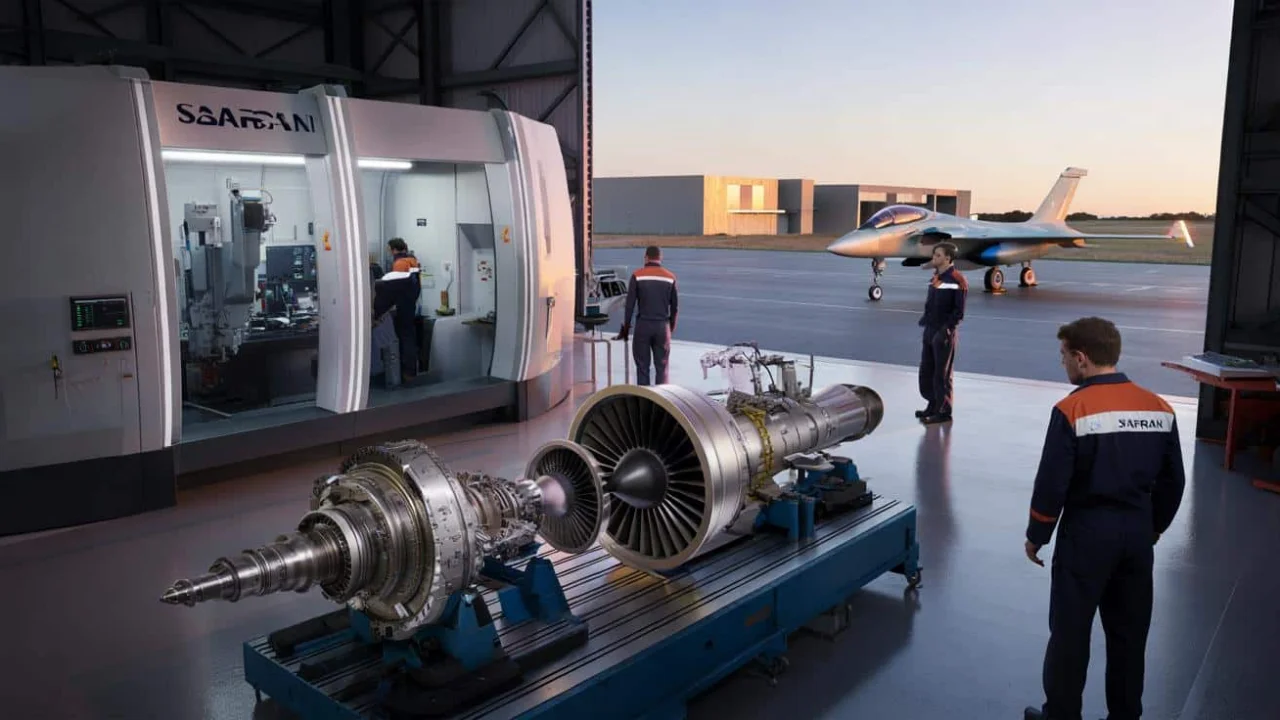
A Strategic Gamble in the Heart of Burgundy
In the rolling hills of Burgundy, where vineyards stretch toward distant horizons, an industrial revolution is quietly unfolding. The peaceful commune of Le Creusot, once known primarily for its metallurgical heritage, is about to become one of France’s most critical defense manufacturing hubs. Here, amid the tranquil French countryside, Safran Aircraft Engines is making a bold €70 million bet that will fundamentally reshape the production landscape for the rafale fighter jet.
This isn’t just another factory expansion—it’s a calculated move that speaks to France’s deepening commitment to defense sovereignty and industrial independence. As geopolitical tensions rise across Europe and beyond, the decision to transform a civil aviation facility into a cornerstone of military production represents more than economic strategy; it embodies a nation’s determination to control its own destiny in an increasingly uncertain world.
The transformation of Le Creusot from a specialized civil aviation workshop to a strategic military manufacturing center tells a compelling story of adaptation and foresight. Until now, this facility has operated in the shadows of commercial aviation, meticulously crafting low-pressure turbine discs for civilian aircraft engines. But as international demand for the rafale fighter jet continues to surge, Safran has recognized that France needs more than one critical production facility to meet its ambitious defense export goals.
What makes this investment particularly striking is its timing and scale. With €70 million committed to expanding the facility by 9,000 square meters, Safran is not merely upgrading existing capabilities—they’re creating an entirely new industrial ecosystem designed to support France’s most advanced fighter aircraft for decades to come.
From Civil Aviation to Military Powerhouse
The Le Creusot facility’s journey from civil to military production represents one of the most significant industrial pivots in recent French aerospace history. Previously focused on machining components for commercial engines like the LEAP and CFM56, the plant is now preparing to take on the far more complex and sensitive task of producing rotating parts for the M88 engine that powers the rafale fighter jet.
| Facility Aspect | Current Status | Post-Expansion (2029) |
|---|---|---|
| Total Floor Space | 17,000 square meters | 26,000 square meters |
| Primary Focus | Civil aviation components | Military and civil engine parts |
| Key Products | LEAP/CFM56 turbine discs | M88 rotating parts, GE90 components |
| Investment Value | Existing infrastructure | €70 million expansion |
| Strategic Role | Regional manufacturing | Critical defense supply chain hub |
The complexity of this transition cannot be overstated. Manufacturing components for the M88 engine requires entirely different security protocols, quality standards, and technical expertise compared to civil aviation work. The facility will need to implement enhanced security measures, specialized tooling, and rigorous testing procedures that meet the exacting standards required for military applications.
“This expansion represents more than just increased production capacity—it’s about creating industrial resilience for one of France’s most strategic defense programs. By establishing Le Creusot as a second source for critical M88 components, we’re ensuring that Rafale production can continue even in the face of unexpected disruptions,” explains a senior Safran executive familiar with the project.
Strategic Advantages of Industrial Redundancy
The decision to establish Le Creusot as a second major production site for rafale fighter jet engine components reflects sophisticated strategic thinking. Currently, Safran’s primary facility for complex M88 rotating parts is located at Évry-Corbeil, south of Paris. While this site has served the program well, relying on a single location for such critical components carries inherent risks.
The benefits of this industrial diversification strategy include:
- Supply Chain Resilience: Multiple production sites reduce vulnerability to localized disruptions, whether from technical incidents, natural disasters, or other unforeseen circumstances
- Increased Production Capacity: With growing international demand for the Rafale, having two major facilities ensures France can meet both domestic and export requirements
- Customer Confidence: International buyers investing billions in aircraft and training programs need assurance that spare parts and maintenance support will remain available throughout the aircraft’s operational lifetime
- Geographic Distribution: Spreading production across different regions of France reduces concentration risk and provides greater operational flexibility
- Competitive Advantage: Enhanced production capabilities strengthen France’s position in the global fighter aircraft market against competitors like the F-35 and Eurofighter
This redundancy strategy is particularly crucial given the long-term nature of fighter aircraft programs. Unlike commercial aviation, where airlines might switch aircraft types relatively frequently, military customers typically operate fighter jets for 30-40 years or more. Ensuring continuous support throughout this extended lifecycle is essential for maintaining France’s reputation as a reliable defense partner.
International Market Dynamics and Export Success
The timing of Safran’s Le Creusot expansion coincides with unprecedented international success for the Rafale program. By January 2024, international customers had placed orders for approximately 220 Rafale aircraft, representing billions of euros in export revenue and cementing France’s position as a major player in the global fighter aircraft market.
Key international Rafale customers include:
- Egypt: 54 aircraft ordered across multiple contracts
- India: 36 aircraft delivered, with potential for additional orders
- Qatar: 36 aircraft in various stages of delivery
- United Arab Emirates: 80 aircraft in the largest single export contract
- Indonesia: 42 aircraft representing Rafale’s entry into Southeast Asian markets
- Greece: 24 aircraft strengthening NATO interoperability
“The international success of the Rafale program validates our investment strategy. Countries don’t just buy aircraft—they buy into an entire industrial ecosystem. Our expansion at Le Creusot demonstrates our long-term commitment to supporting these partnerships,” notes a defense industry analyst tracking European fighter aircraft exports.
This export success creates a virtuous cycle for French defense manufacturing. International sales help amortize development costs, generate revenue that can be reinvested in future capabilities, and create economies of scale that benefit both export customers and the French military. The Le Creusot expansion is both a response to this success and an investment in sustaining it over the coming decades.
Technology Transfer and Industrial Sovereignty
The expansion of Le Creusot represents more than just increased production capacity—it embodies France’s broader strategy of maintaining technological sovereignty in critical defense sectors. Fighter jet engines rank among the most sensitive technologies in modern defense, incorporating advanced materials, precision manufacturing techniques, and sophisticated design principles that few countries can master independently.
By expanding domestic production capacity, France reduces its dependence on foreign suppliers and maintains complete control over the entire Rafale supply chain. This sovereignty extends beyond immediate manufacturing to encompass research and development, quality control, maintenance protocols, and long-term technological evolution.
“Industrial sovereignty in defense isn’t just about current production—it’s about maintaining the knowledge base and manufacturing capabilities needed to evolve and upgrade systems over their entire operational lifetime. The Le Creusot expansion ensures France retains these critical capabilities,” explains a former French defense ministry official.
Frequently Asked Questions
What makes the M88 engine special for the Rafale fighter jet?
The M88 provides exceptional thrust-to-weight ratio, enabling supercruise capability and superior maneuverability in combat situations.
When will the Le Creusot facility begin producing M88 components?
Initial M88 operations will begin in 2026 on existing lines, with full production in new facilities by 2029.
How does this expansion affect Rafale export customers?
It provides greater supply chain security and confidence in long-term parts availability for international operators.
What other engines will be produced at the expanded facility?
Besides M88 components, the facility will also manufacture parts for the GE90 engine used on Boeing 777 aircraft.
Why is having multiple production sites important for defense manufacturing?
Multiple sites reduce risk, increase capacity, and ensure continuous production even if one facility faces disruptions.
How does this investment support French defense industry goals?
It strengthens industrial sovereignty, supports export competitiveness, and maintains critical manufacturing capabilities domestically.
Looking Toward the Future
The transformation of Le Creusot into a major hub for Rafale engine production represents more than an industrial expansion—it’s a statement about France’s long-term vision for its defense industry. As global military spending increases and nations seek to modernize their air forces, France is positioning itself not just as a supplier of advanced aircraft, but as a reliable long-term partner capable of supporting these systems throughout their operational lives.
The €70 million investment in Le Creusot will create hundreds of specialized jobs, contribute to regional economic development, and strengthen France’s position in the global aerospace supply chain. More importantly, it ensures that the rafale fighter jet program has the industrial foundation needed to compete successfully in international markets for decades to come.
As the facility takes shape over the coming years, Le Creusot will stand as a testament to France’s commitment to defense industrial independence and its determination to maintain a leading position in the global fighter aircraft market. In the quiet hills of Burgundy, the future of French air power is being forged, one precision component at a time.